The house, on the record
The meaning
of Olori
In Yoruba, an Olori is she who is head — the consort of a king, the one who carries the court’s grace. We named the house for her because we make jewellery for people who move through the world that way: recognised before they are announced.
A Yoruba name from one coast of Africa; a house raised in Nairobi on another. The distance between them is the point — this house belongs to the whole continent, and answers to none of its clichés.
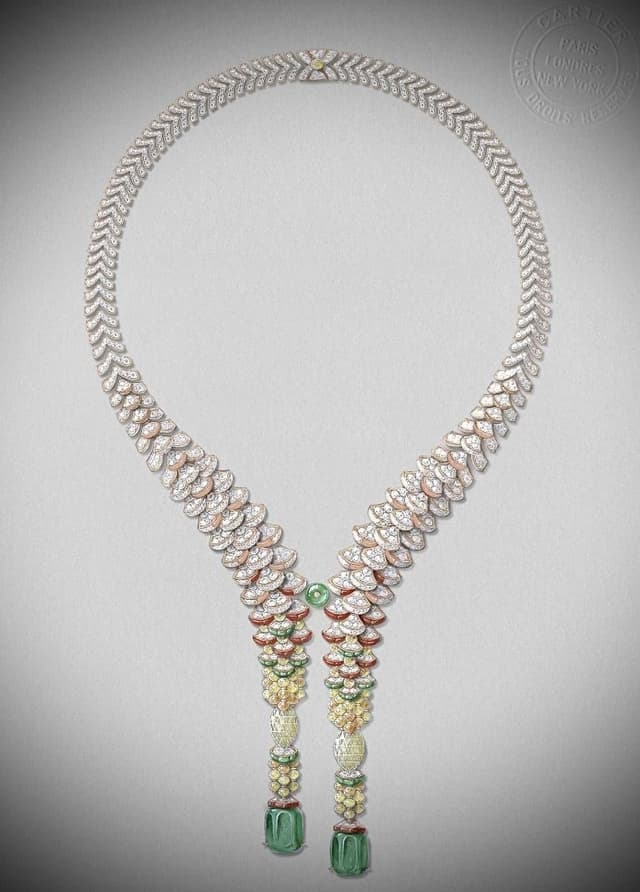
Every piece begins as gouache on grey paper, the way court jewels have been promised for two centuries. The painting is approved before a single claw is raised; if it does not please, we paint again — covenants are patient.
The cutters are named on the papers — A. Njoroge cuts for temperature rather than depth — and paid as craftsmen, not brokers. Editions close at nine and do not reopen. What leaves this house does not come back into fashion, because it never enters it.
For now the house cuts for the neck alone — collar, choker, matinee. Rings and the rest will follow when they can be done exactly, and not a season before.
Gemstones &
sourcing
Seven stones, each born somewhere it is proud of. Named ground, papered origin, treatments disclosed — the sourcing covenant is published, not promised. Read it here.
Certification
& care
Every principal stone travels with its report — GIA or IGI — and the number is printed on the papers so you may verify it yourself at the laboratory’s records. Any treatment a stone has received — heat, oil, none — is written on the same page, plainly. Certification applies to the principal stone; accent stones are matched in-house and said so plainly.
Care is simple and seasonal: coloured stone dislikes perfume and applause in that order. Bring the piece to any salon once a year; the atelier will bathe it, tighten it, and return it before you have missed it. Resizing within the edition is at no charge, forever.
The letter, whole
i.I will tell you plainly what this house is for. Not for the gasp — for the quiet after it, when the room has risen and settled and you have not moved at all.
ii.Begin wherever you like. The Line is not the least of us; it is the daily proof — colour you can decide on tonight and answer for in ten years.
iii.Look closely at what the papers say. A stone with its mine written down cannot be flattered — and neither, I hope, can you.
iv.People ask why we name the mines. Because a gift with its origins intact is not a purchase, it is a lineage — and lineage is the only luxury that compounds.
v.Seven names, and none of them invented. Each is a word our grandmothers weighed before we did; a collection is only a promise repeated until it is believed.
vi.When you write to us, write as you speak. The atelier has drawn from a single sentence before; once, memorably, from a silence.
vii.A house is not its address. It is the sum of what it refuses to do twice — and what it insists on doing forever.
viii.I keep this journal so the house cannot lie to itself. Read it, and you will know us before you ever cross our threshold.
ix.And when you are ready — not before — come and sit in the good light, and let the room do what rooms do. I will bring the case myself.
MMXXVI
A house is not its address. It is the sum of what it refuses to do twice — and what it insists on doing forever.
The letter continues — to the Journal